- Program Notes
- It wouldn't be an understatement to say that on the upper deck of a sailing ship, rolling and surging about the tumultuous, often deadly seas, communication presents a unique problem. Contending not only with the waves and noise of the ocean, but also with large distances, the Bosun, responsible for the deck crew activities and upkeep of the ship, relies on their whistle. This whistle, whose origins are unclear, enables communication across massive decks and up masts that can extend hundreds of feet. With it, the bosun employs various songs and calls, many of which are standardized, to call the crew on deck, signal mealtimes, coordinate maneuvers, or simply to draw attention for verbal commands.
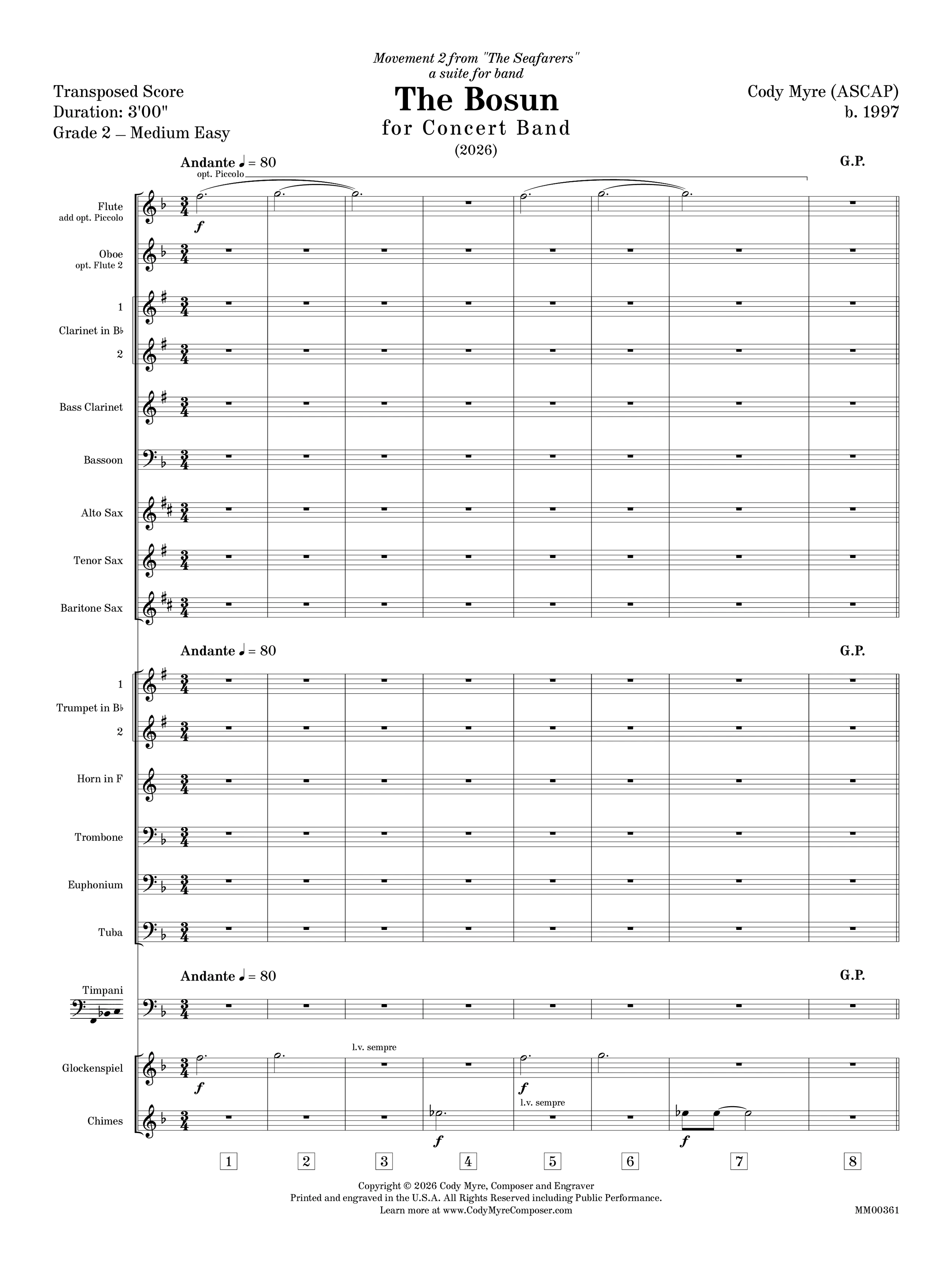
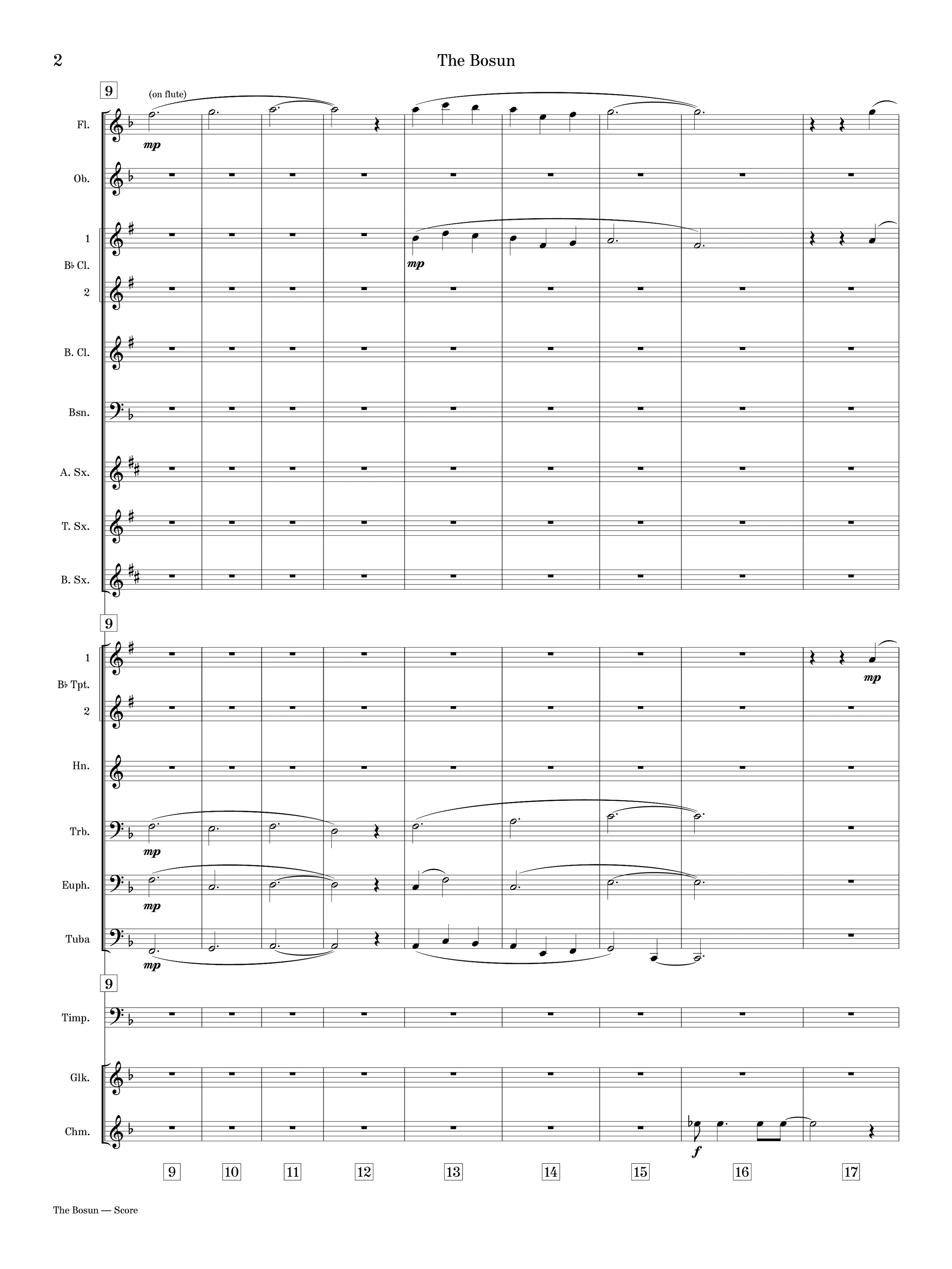
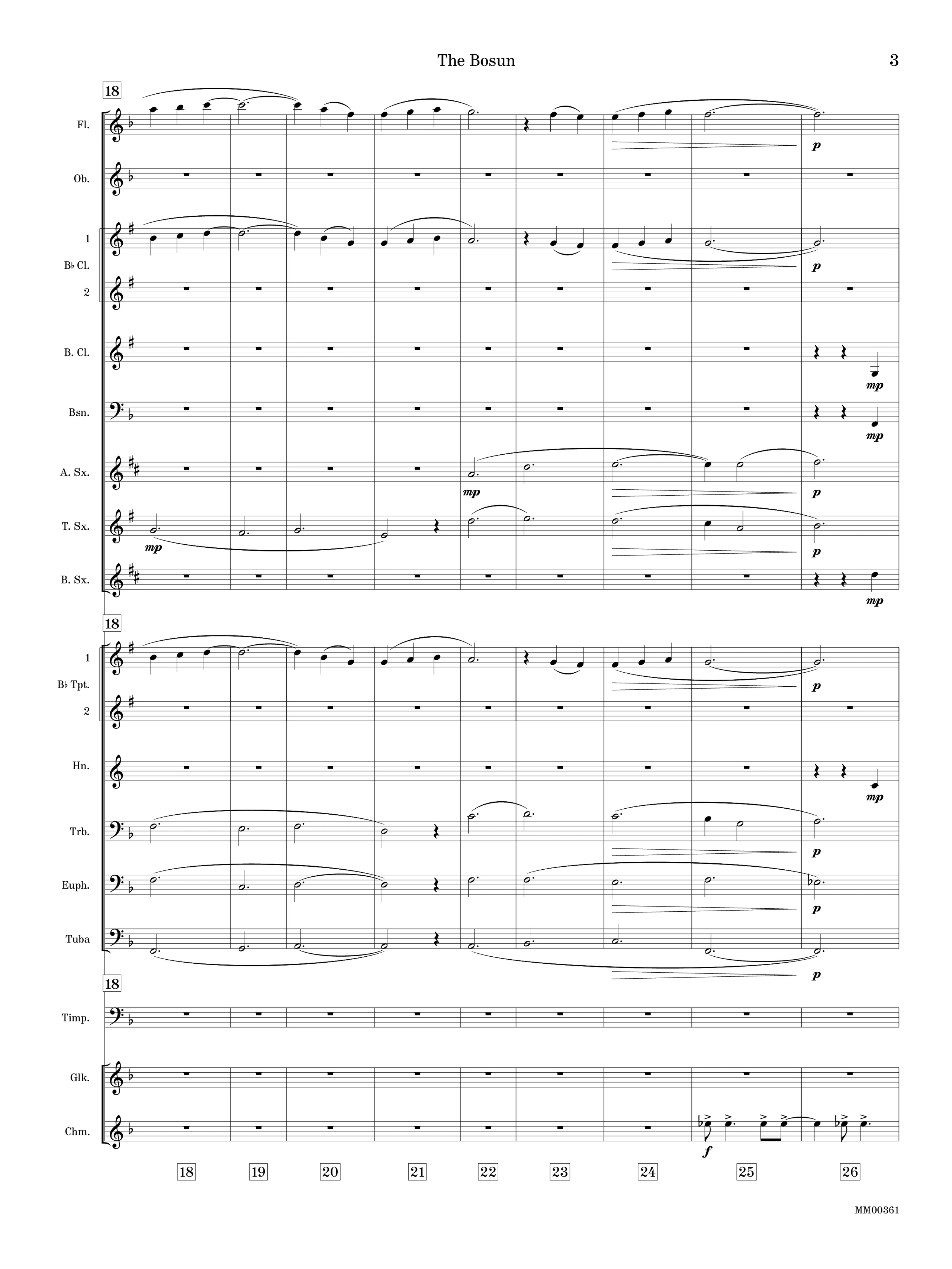
The work opens with a flute call, which may optionally be played on an offstage piccolo, is an adaptation of the "Word to be passed" call. This call is generally used to get the attention of the crew to pass on an order. Here, it is followed by the ringing of the chime (purposefully out of key) to summon imagery of a ship that is soon to weigh anchor. The melody here is an original tune that was inspired by the songs on Paul Clayton’s 1955 album, "Sailing and Whaling Songs of the 19th Century," though I have opted for 9-measure phrases in order to lend some unevenness to the work and further evoke the lilting and ever-changing nature of the seas.
- Publisher
- Cody Myre